
Before You Pay a Deposit: Yacht Charter Deposits, Cancellations and Weather in Puerto Vallarta
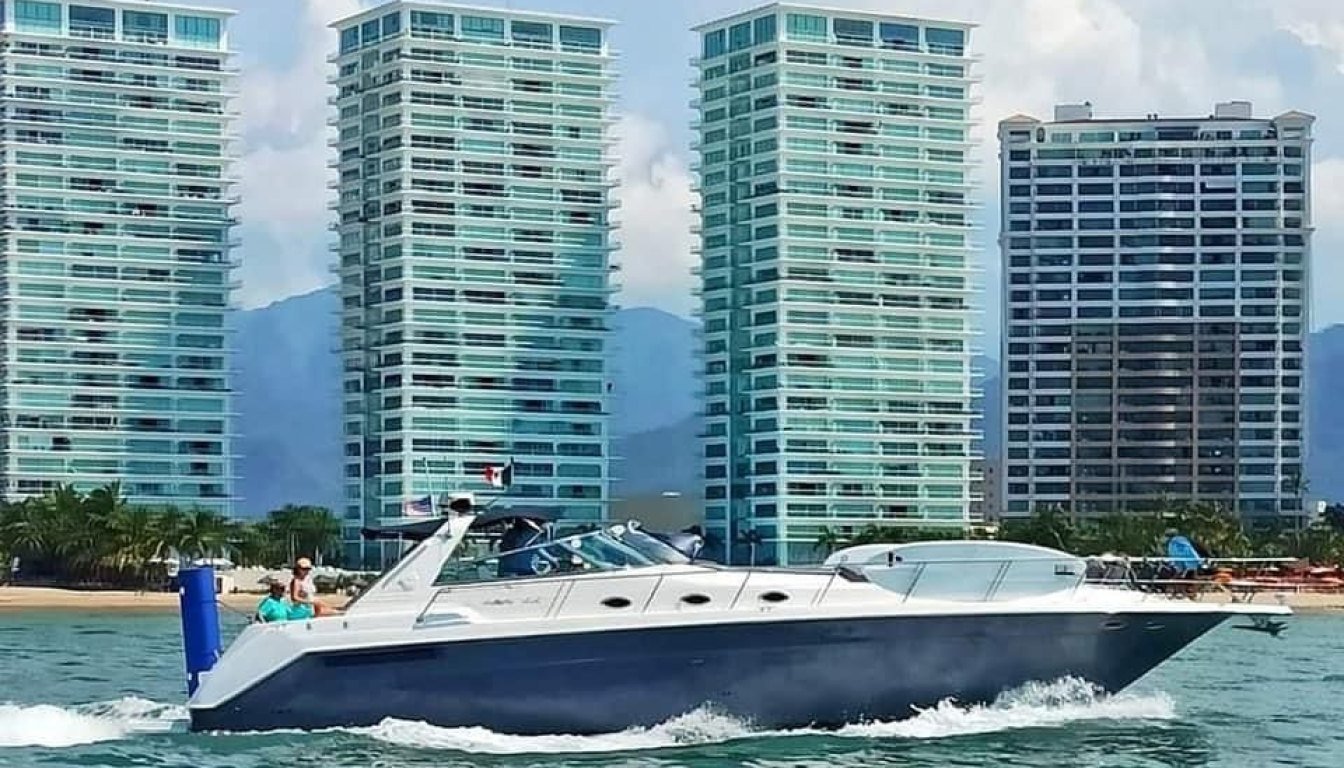
Every week, someone in Puerto Vallarta sends a few hundred or a few thousand dollars to reserve a boat for a birthday, a proposal or a family day at sea. Almost always, the day happens exactly as planned. But when it does not — a storm closes the port, the group shrinks, a flight is cancelled, the boat breaks down — the conversation turns to money, and the only thing that matters is what was agreed before the deposit left your account. This guide focuses on that single moment. It explains how deposits for yacht charters usually work in Puerto Vallarta, how to read a cancellation policy, how weather decisions are made, and exactly which terms you should have in writing. It is general information to help you ask better questions; it is not legal advice for a particular booking.
Why the deposit is the moment that decides everything
Once a charter is confirmed, the owner blocks the date, schedules a captain and crew, buys fuel and provisions and turns away other clients. The deposit compensates that commitment. From the client's side, it is the amount at risk if plans change. Both perspectives are legitimate, which is why disputes are rarely about who is "right" in the abstract. They are about what the parties wrote down.
In our experience, most charter disputes that reach a lawyer share the same root cause: the client paid on the strength of a friendly chat and a price, and nobody put the cancellation rules in writing. The good news is that preventing them costs nothing more than one careful message before you pay.
It also helps to start from a published, comparable offer. On marketplaces built around Puerto Vallarta yacht charters, each listing shows the boat's length, maximum guests, departure marina and a starting price, so you know what you are reserving before the first message is sent — and you have a public record to point to later.
How yacht charter pricing is quoted in Puerto Vallarta
Before you can understand a deposit, you need to understand what it is a percentage of. Charter prices in the bay are not quoted in a single standard way, and confusion between pricing units is a common source of misunderstandings.
The four pricing units you will see
- Per 4-hour block, the most common unit for motor yachts and catamarans. For example, a 50 ft Sea Ray Sundancer for up to 20 guests from Marina Vallarta is published from USD 1,250 per 4 hours, and a 52 ft Azimut for up to 15 guests from USD 1,350 per 4 hours.
- Per day, typical of larger and luxury yachts: a Lagoon 42 catamaran from La Cruz lists from USD 1,600 per day and a 122 ft Hatteras from USD 12,670 per day.
- Per hour, used by some smaller or flexible operators, such as a Bertram 38 from Marina Los Peines at USD 200 per hour or a 58 ft Hatteras from Marina Nuevo Vallarta at USD 485 per hour.
- Per person, common on large party catamarans; the 72 ft Canuwa II lists from USD 105 per person for groups of up to 120 guests.
Some operators quote in Mexican pesos — one 47 ft Lagoon catamaran is published from MXN 4,000 per hour — while most quote in US dollars. Your written confirmation should state the unit, the currency, the number of hours and whether the total includes taxes. If you pay in pesos a price quoted in dollars, agree on the exchange rate in advance rather than on the dock.
Common deposit structures
There is no single legal rule that fixes the size of a charter deposit in Mexico; it is a matter of agreement between the parties. In practice, you will usually see one of these structures:
- Partial deposit and balance before departure. A percentage is paid to confirm the date and the balance is paid some days before the trip or on the day of departure.
- Full prepayment. Common for short-notice bookings, holiday dates and very large yachts, where the owner cannot easily resell the date.
- Deposit plus a security or damage deposit. Some luxury yachts and boats with expensive water toys request a separate, refundable amount that is returned after the trip if nothing is damaged.
- Platform checkout. When you reserve through a booking platform, its own payment and refund terms may apply in addition to the owner's policy, so read both.
Whatever the structure, the confirmation should answer three questions in figures, not adjectives: how much you pay now, how much you pay later and when, and how much you get back in each cancellation scenario. Owners who publish their boats among Banderas Bay yacht charters generally state whether they price per hour, per 4 hours, per day or per person, which makes it easy to check that the deposit is calculated on the right base.
Reading a cancellation policy line by line
A good cancellation policy separates situations according to who or what caused the cancellation. Mixing them is where most arguments start. The table below shows the scenarios worth distinguishing and the outcomes that are commonly agreed in the market. Your contract may say something different — the point is to make sure it says something.
| Scenario | Outcome commonly agreed | What to have in writing |
|---|---|---|
| Client cancels well in advance | Refund of the deposit minus a fee, or full credit for a new date | The cut-off date and the fee, in figures |
| Client cancels at short notice or does not show up | Deposit retained, sometimes the full price | The deadline after which nothing is refundable |
| Port closed by the authority or unsafe weather | New date, credit or refund | Who decides, and the client's choice of remedy |
| Mechanical failure or crew problem | Substitute boat of equal category, or full refund | Whether a substitute is allowed and of what size |
| Trip cut short for weather after departure | Partial credit, or none if most of the trip was completed | How unused hours are treated |
| Trip ended early because of guest conduct | No refund | House rules accepted by the organizer |
Watch for vague words
Phrases such as "flexible policy", "we will work something out" or "no problem if it rains" sound reassuring, but they are almost impossible to enforce. Ask the owner to turn them into concrete terms: a date, a percentage, a remedy. A professional operator will not be offended; most already have a written policy and will be glad you asked. If you are still deciding, shortlist two or three Puerto Vallarta yacht rentals and send each owner the same questions; comparing their answers side by side is the fastest way to spot a weak policy.
Weather: who decides and what happens next
Banderas Bay is one of the calmest large bays on Mexico's Pacific coast, and most charter days run without any weather issue. Still, summer storms, strong afternoon winds and the hurricane season (roughly June to November on the Pacific) do lead to cancellations, and they are the most frequent reason for deposit disputes.
The port authority has the last word
In Mexico, the harbor master's office (Capitanía de Puerto) can restrict or suspend departures when sea conditions are dangerous. When the port is closed, no captain may lawfully leave, regardless of what the client wants or what the contract says. A captain may also decide not to depart, or to return early, when conditions are unsafe even if the port is open. Your agreement should recognize both decisions and connect each one to a remedy.
Questions to settle before you pay
- If the port is closed on my date, can I choose between a new date and a refund, or only a new date?
- How long is a credit valid, and can it be used on a different boat from the same owner?
- If the forecast looks bad but the port is open, who decides whether we go, and what happens if we prefer not to?
- If we must return early, are unused hours credited?
- Can the route be changed instead of cancelling — for example, staying inside the bay instead of crossing to the Marietas Islands?
Departure point can matter here too. On windy days, boats leaving from the north shore may have a shorter, more protected run to certain destinations; when you compare La Cruz yacht charters with departures from Marina Vallarta, ask each owner how they handle a changing forecast.
What to get in writing before you pay a deposit
A charter agreement does not have to be a formal contract signed before a notary. A detailed booking confirmation by email or messaging app can be perfectly adequate evidence of the agreement, provided it contains the right information. Before transferring money, make sure you have, in writing:
- The full name of the owner or company receiving the payment, and the account holder's name if it is different.
- The boat's name, model and length, and whether a substitute is allowed.
- Date, departure time, duration, departure marina and maximum number of guests.
- Total price, pricing unit, currency, taxes and the exchange rate if paying in pesos.
- What is included: captain, crew, fuel for the planned route, drinks, food, snorkel gear, paddleboards, marine park fees and fishing licenses where relevant.
- Deposit amount, balance and due date.
- The cancellation scenarios from the table above, each with a concrete outcome.
- How refunds are paid (same method, timeframe) and how credits are used.
- Any security deposit for damage, and how and when it is returned.
- For business clients, whether an official Mexican invoice (CFDI) will be issued.
Keep screenshots of the listing as it appeared when you booked. If the boat you are offered on the day is different from the one published, that record is your best evidence.
A simple message that protects you
You do not need legal language. A short message along these lines, sent before you pay and answered in writing by the owner, settles most future disagreements: "Before I send the deposit, could you please confirm the boat, date and times, the total price in USD and what it includes, the deposit and balance, and what happens if (a) we cancel, (b) the port is closed or the weather is unsafe, or (c) the boat has a mechanical problem?"
Paying safely
How you pay matters almost as much as what you agree. As a general rule:
- Prefer traceable methods — credit card, bank transfer to an account in the operator's name, or the checkout of a recognized platform. Credit cards may also give you a dispute mechanism with your bank if a service is not delivered.
- Be careful with cash and personal accounts. Paying a large deposit in cash, or to a third party's account, makes it much harder to prove the payment or identify who received it.
- Match the names. The person you agreed with, the name on the bank account and the owner of the boat should make sense together; in a boat rental by owner arrangement, they usually coincide.
- Keep everything: receipts, messages and the confirmation, in one folder.
For very large events — a corporate charter for dozens of guests, or a full day on a superyacht — some clients prefer to hold the funds through a neutral third party until the service is delivered. That is the same logic behind escrow services in real estate, and it can be adapted to high-value service contracts.
Booking directly with the person who runs the boat also simplifies the money trail. With an owner-direct yacht rental, the party setting the cancellation policy is the same party who receives your deposit and delivers the trip, so there is no reseller whose terms may differ from the owner's.
If something goes wrong
Most problems are resolved with a calm conversation, especially if the terms were written. If not, the usual sequence is:
- Gather the evidence: confirmation, payments, listing screenshots, messages and, if relevant, the port authority's closure notice or weather reports for the day.
- Make a written request to the owner or company, referring to the agreed terms and stating what you expect — a refund, a credit or a new date — and by when.
- Use the payment channel: if you paid through a platform or by card, its dispute process may be the quickest route.
- Consumer complaint: Mexico's federal consumer protection agency (PROFECO) handles complaints against businesses that provide services to consumers and offers conciliation.
- Legal advice: for significant amounts or corporate contracts, a lawyer can send a formal demand and evaluate other options.
If you live abroad, a properly drafted power of attorney lets a representative in Mexico handle the follow-up for you, although for most charter disputes a written demand and a conciliation process are enough.
Choosing operators with clear, published terms
The simplest way to avoid deposit problems is to choose owners whose terms are clear before you ask. Transparent listings — with the boat, capacity, marina and price stated — usually come from operators who also have a written cancellation policy. The Puerto Vallarta Yacht Charters & Rentals directory on BYRBO, for instance, gathers 77 published boats from their owners, from 25 ft sportfishing boats to 122 ft superyachts.
When you narrow down your options, compare like with like. A private yacht rental in Puerto Vallarta for six people on a 35 ft sport boat and a corporate day for 40 people on a party catamaran involve very different deposits and risks. For catamarans specifically, the catamaran charters in Puerto Vallarta category lets you compare capacities and starting prices side by side, and the Azimut 52 listing is a good example of how a motor-yacht listing presents capacity, marina and rate.
Finally, remember that the deposit is only one part of the picture. Captain and crew, safety equipment and insurance also deserve questions. But if you get the money terms right, almost every other problem becomes easier to solve — and you can focus on choosing the best of the yacht rentals in Puerto Vallarta for your group.
Frequently Asked Questions
How much deposit is normal for a yacht charter in Puerto Vallarta?
There is no fixed legal percentage; it depends on the owner, the boat and how far in advance you book. Partial deposits with the balance before departure are common, while short-notice bookings, holiday dates and large yachts often require full prepayment. What matters is that the amount, the balance and the refund rules are written in figures before you pay.
Do I get my deposit back if the port is closed because of the weather?
It depends on what you agreed. Many owners offer a new date, a credit or a refund when the harbor master closes the port or the captain cancels for safety, but some only offer rescheduling. Ask for the weather clause in writing and whether you can choose between a refund and a new date.
Can the owner keep my deposit if I cancel?
Often yes, at least in part, if the cancellation policy you accepted says so — especially for late cancellations, when the owner can no longer resell the date. That is why the policy should state cut-off dates and amounts in concrete terms.
What if the boat I get is not the one I booked?
Your confirmation should say whether a substitute boat is allowed and of what category. If you receive a materially different boat without having agreed to it, keep the listing screenshots and your confirmation and raise it in writing immediately; a refund or a price adjustment is a reasonable request.
Is paying the deposit in cash a problem?
It is not illegal, but it makes proving the payment and identifying the recipient much harder. Traceable methods — card, transfer to an account in the operator's name or a recognized platform's checkout — give you far better protection if something goes wrong.
Sources & references
- BYRBO — boat rental by owner in Puerto Vallarta
- Catamaran charters in Puerto Vallarta
- La Cruz yacht charters
- Azimut 52, Marina Vallarta
- Sea Ray 50 Sundancer, Marina Vallarta
Prices quoted are the starting rates published by each owner on byrbo.com as of October 2026 and may change. This article is general information and does not constitute legal advice for any specific booking.
Booking a high-value charter or corporate event?
Compare charters by owner in Puerto Vallarta, then send us the confirmation and the cancellation terms. We can review them before you pay — in English. Contact our office.
Puerto Vallarta's trusted bilingual law firm since 2004. Specializing in real estate closing, timeshare cancellation, immigration, and business law. Learn more →
Need Legal Help in Puerto Vallarta?
Our bilingual lawyers are ready to assist you. Free consultation available.